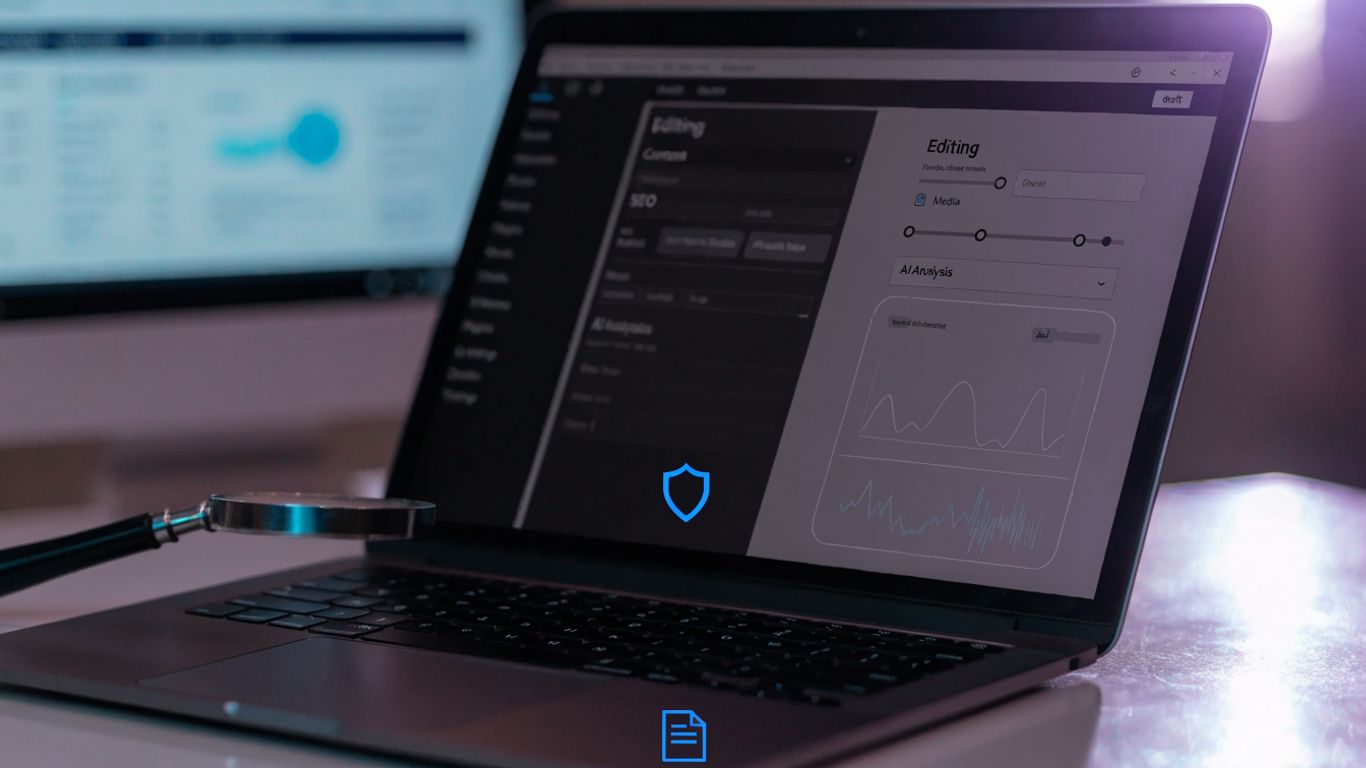
Copyleaks has introduced Content Guard, a WordPress integration designed to scan articles for AI-generated text and plagiarism before publication. The tool automatically checks drafts submitted for editorial review and is paired with a web-monitoring service for finding reused material. Publishers considering it should also weigh detection limits, data handling and the upkeep of another WordPress plugin.
Key takeaways
- Content Guard scans WordPress posts when they move into “Pending” status.
- The integration displays AI, plagiarism and grammar indicators inside WordPress, according to Copyleaks.
- The company has not published pricing or independent accuracy results for the product.
- Adding an editorial plugin makes routine WordPress maintenance and compatibility checks important.
How Content Guard works
Copyleaks says its integration runs checks within publishers’ editorial workflows, with WordPress the first supported content management system. A scan is triggered when a post enters Pending, the status commonly used to submit a draft for review. Editors can see results in the WordPress post list, while administrators can configure settings and permissions.
The company also describes a separate web scan that searches for plagiarism and unauthorized reuse across what it says is an index of 60 trillion pages. It says publishers can use the service to identify copied material and potential licensing opportunities. Other CMS integrations are planned, but Copyleaks has not announced a timetable; publishers on other platforms can use its API, according to the company.
Accuracy and workflow questions remain
Copyleaks claims its AI detection achieves more than 99% accuracy across leading language models. However, it has not provided testing details or a false-positive rate in the materials supplied. Those omissions matter: a detection score is a signal for editorial review, not proof that a person used AI. The company also has not explained whether the plugin can prevent publication or simply show results for editors to assess.
Publishers should also check how draft text is handled when sent for analysis, whether rescanning uses additional credits, and how the system treats licensed syndicated copy. These details are especially relevant for newsrooms handling unpublished or sensitive material.
A plugin adds another maintenance task
The launch is a reminder that WordPress sites are increasingly shaped by plugins that support editorial, security and publishing workflows. Before installing an integration, site owners can review its access permissions, confirm what information it processes, and test it on a staging site. Backups and a rollback plan help if an update or compatibility issue disrupts publishing.
A WordPress maintenance plan or care plan can help keep plugins and the core platform updated, monitor site health and provide a safer process for testing changes. That does not validate an AI detector’s results, but it can reduce the risk that a useful editorial tool becomes a source of avoidable downtime.
What publishers should verify before adopting it
The WordPress product page and launch announcement differ in some details, including product naming and language coverage. Neither provides a Content Guard price, and the plugin’s costs may depend on API usage. Publishers should ask Copyleaks for a written explanation of pricing, data retention, language support and how editorial thresholds work before rolling it out across a newsroom.
Used carefully, automated checks may help teams apply consistent review policies. Human editors still need to interpret the results and make the final call on whether a draft meets their standards.